
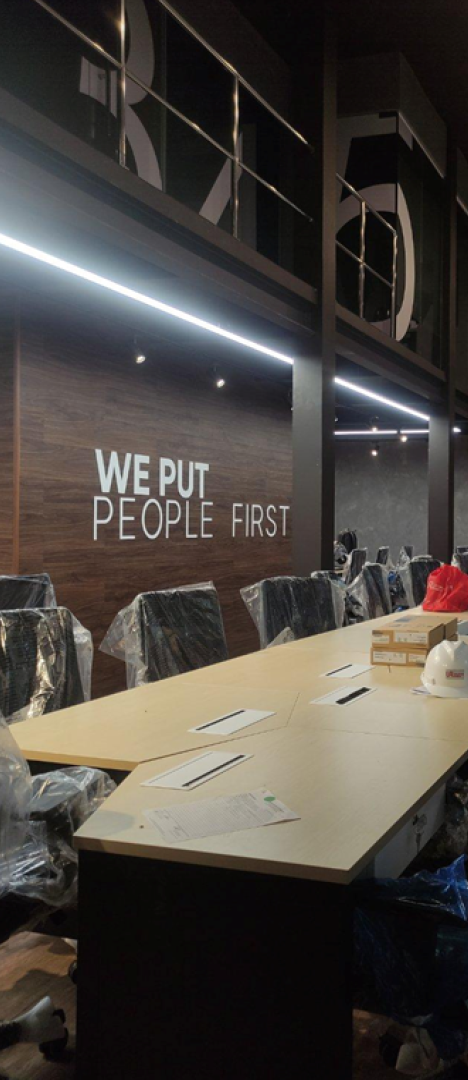
Building
with Intent:
The Malvar Plant

Growth, especially in uncertain conditions, is not about doing more. It is about knowing where to act and having the discipline to follow through.
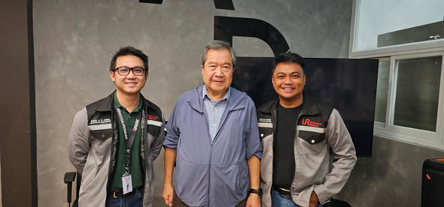
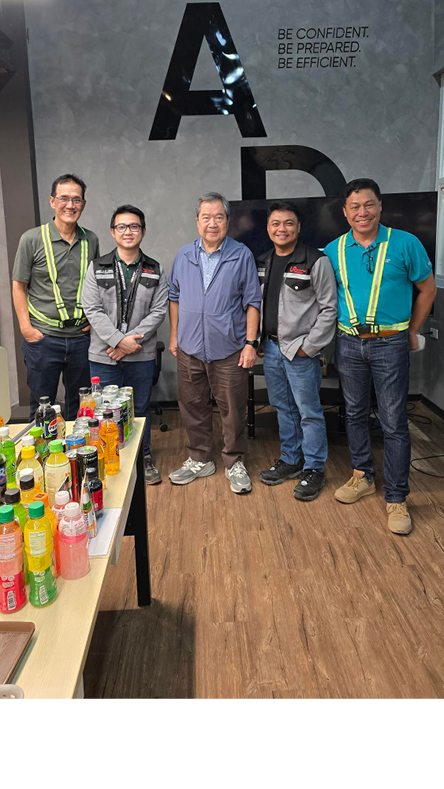
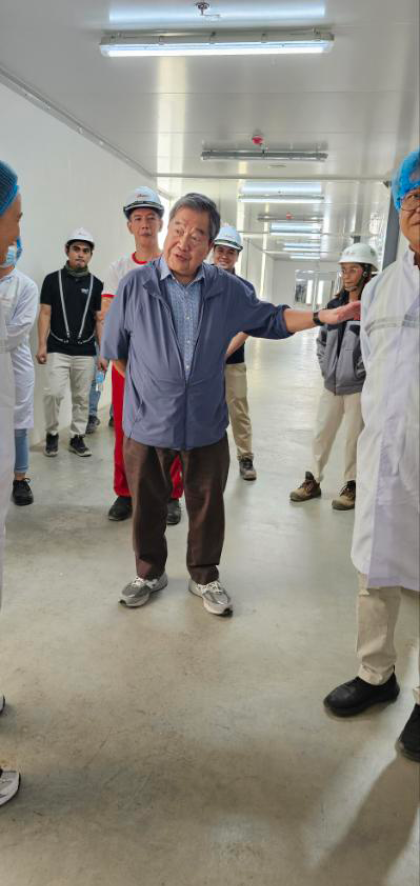
In 2025, Universal Robina Corporation began the initial commercial run of its new manufacturing facility in Malvar. The move reflects a deliberate decision to strengthen capacity in areas where the company is already competitive, and to do so ahead of need rather than in response to it.
The Malvar plant is designed as a large-scale production hub, built in phases over the next decade. At full build-out, it is expected to span more than 30 hectares and house over 20 manufacturing lines across multiple product categories. Many of URC’s future products are expected to be produced here, making it a central part of the company’s long-term growth plans.
Its role is straightforward. It expands capacity, improves efficiency, and gives the business more room to execute. Rather than stretching resources across too many fronts, URC is concentrating investment where it matters most, in core categories with established demand and strong brand positions.
The scale of the investment, which is part of a continued commitment to invest beyond, reflects a disciplined approach to growth. This is not expansion for its own sake. It is a targeted effort to support what is already working and to do it better.
Timing also plays a role. The operating environment remains uneven, shaped by commodity volatility and shifting consumer behavior. These conditions can slow decision making. For URC, they reinforced the need to move early and build capacity ahead of demand.
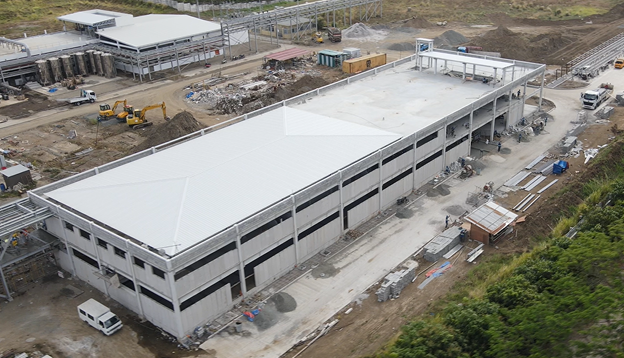
The Malvar Plant: Flexible, Efficient Capacity
The Malvar facility enables that flexibility. It allows the company to respond more quickly as conditions improve, whether by scaling production, supporting new product introductions, or managing costs more effectively across its operations.
At the same time, the plant raises the standard of how that production happens. It is designed with modern, digitized manufacturing systems that optimize the use of materials, energy, and labor. Features such as solar power, heat recovery systems, and water reuse are built into the facility, alongside design elements that maximize natural light and ventilation. These are practical steps that improve efficiency while reducing environmental impact.
The 2025 activation marks the beginning of a longer build-out. As more lines come online over time, the facility will play a larger role in supporting URC's growth, not just in volume, but in consistency, cost management, and execution.
More than its scale, what stands out is the intent behind it. The Malvar plant reflects a clear set of choices about where to invest and how to build for the future, with capacity, capability, and efficiency developed together.

Turning AI into
Everyday Advantage
For many organizations, AI still carries a sense of hesitation. It is often seen as something complex, disruptive, or even threatening. But in practice, the real question is simpler: how can it help people do better work?
In 2025, Universal Robina Corporation took a more direct approach. Rather than treating AI as a distant capability, the company focused on embedding it into everyday processes across the business. The goal was not to experiment for its own sake, but to solve real problems and improve how work gets done.
The shift began by moving from isolated tools to a more connected system.
Across the year, URC launched multiple digital initiatives and advanced key platforms, including its SAP S/4HANA upgrade. These efforts were designed to streamline operations, improve data quality, and create a more consistent foundation for how information is used across teams.
One of the earliest platforms introduced in 2025 was DiVA, the Discovery Virtual Assistant. Designed to support Consumer and Marketing Insights and Media and Digital Marketing teams, DiVA plays a central role in how ideas are developed and refined.
It supports ideation sessions, workshops, and early stage concept development, helping teams move more quickly from insight to execution. Instead of starting from a blank page, teams can explore directions, test ideas, and structure thinking in a more guided way. The result is a faster, more collaborative process that strengthens outputs from the very beginning.
Alongside this, AI is being applied across marketing workflows, from research and scenario planning to campaign optimization and performance tracking. This allows for more efficient use of marketing spend, while enabling more relevant and effective content creation.

AI Impact in Daily Workflows
As the year progressed, URC expanded its focus on data and decision making. In the third quarter, the company advanced DAVE, the Data Analytics Virtual Expert, building on earlier work in sales data and scaling it into a broader analytics platform.
DAVE allows teams to access and work with data more easily. Instead of relying on static reports, users can ask questions in plain language and generate insights on demand. With more than 30 built in reports and a growing user base, it is helping reduce bottlenecks and enabling faster, more informed decisions.
The impact is practical. Tasks that once took hours can now be completed in minutes. Data is easier to access, easier to understand, and more widely used, leading to gains in productivity and cost efficiency.
At the same time, AI adoption at URC is extending beyond analytics into employee experience. EVA, the company’s HR chatbot, was the first AI chatbot deployed in URC Philippines. It supports employees by providing quick access to HR services and information, improving responsiveness while reducing manual workload for HR teams.
As a practical, everyday tool, EVA reflects how AI can simplify internal processes and enhance employee experience. The platform continues to evolve, with ongoing enhancements and exploration of how it can be scaled further across URC International.
By the fourth quarter, URC introduced SAGE, its first agentic AI platform, marking a step forward in how AI can support not just insight and analysis, but execution.
SAGE is designed to operate within defined governance frameworks, assisting teams in planning and managing work more effectively. Its initial application is in project management, through a Project Scoping Document Agent that helps structure requirements, align priorities, and ensure clarity at the outset of initiatives.
Unlike traditional tools that simply generate outputs, SAGE is built to guide processes. It helps reduce manual effort while maintaining alignment with organizational standards.
Early applications show how this can streamline workflows and free up time for higher value decisions. Looking ahead, URC is actively exploring how agentic AI can be expanded across more processes within the
organization, extending its role from support to coordination and execution at scale.
Taken together, these initiatives reflect a shift in how AI is being used across the business. It is no longer a separate function or a future consideration. It is becoming part of how work gets done, from marketing and HR to analytics and project execution — all to help the company better operate in a fast moving, ever evolving world.


Sharpening the
Path to Value

In 2025, Universal Robina Corporation refined its strategic plan with a clearer view of where it will compete, how it will win, and how it will create long-term value.
At the center are three financial goals. The first is steady and sustainable high single-digit revenue growth, driven primarily by volume. The second is double-digit profit growth, supported by stronger margins and more efficient operations. The third is improving returns on invested capital, through tighter discipline in how the company allocates and uses its resources.
These goals shape how capital and effort are deployed across the business — ensuring that investments are directed toward areas that can deliver the best returns over time, and that performance is continuously monitored against that standard.
This refined plan builds on the company’s “Grow the CORE / Expand for MORE” agenda, now with sharper definition.
“Grow the CORE” focuses on categories where URC already leads — its Core Leaders. These include segments such as snacks, ready-to-drink tea, and confectionery, where the company holds strong positions. The strategy here is to expand the category while protecting and strengthening that leadership.
This means driving demand, investing in capacity and product quality, and ensuring consistent availability on shelves. Success is measured not only by share, but by how the category itself grows and how deeply the brand is embedded in everyday consumption.
“Expand for MORE,” on the other hand, is centered on the company’s Challengers. These are businesses where URC is not yet number one, but where a clear and realistic path to leadership exists. The focus is on building that path deliberately — growing faster than the market while improving the underlying economics of the business.
This includes strengthening distribution, sharpening advertising and promotions,
Five Execution Capabilities
and building into adjacencies that build on existing capabilities. While URC will continue to push the boundaries to deliver innovative products, the emphasis is on opportunities where URC’s systemic strengths give it sustainable competitive advantage.
This distinction between Core Leaders and Challengers clarifies where the company chooses to play. It defines the boundaries for expansion, reinforces focus on areas of strength, and ensures that innovation remains anchored in domains where the company can compete effectively.
With “where to play” more clearly defined, the next question is how to win.
URC’s strategy is built around five execution capabilities:
- Products and brands that people choose
- A strong and efficient supply chain
- Effective sales and distribution
- A capable, values-led organization
- The use of digital tools and AI to improve decisions
These capabilities are designed to work together. Strong brands and innovations combine to create products that consumers choose everyday. The best-in-class supply chain and customer-centric distribution system ensure that demand is met reliably and at scale. A fully united organization, supported by better data and AI-enabled
insights, allows the company to respond faster and execute with greater consistency.
When aligned, these capabilities improve scale, strengthen margins, and reinforce the company’s ability to generate accelerating returns.
Overall, the updated strategy reflects a more disciplined approach to growth — one that starts with clarity on where to play, builds on existing strengths, and links every major investment to the goal of creating sustained value for shareholders.
“

URC's strategy
is built around
five execution
capabilities
- Products and brands that people choose
- A strong and efficient supply chain
- Effective sales and distribution
- A capable, values-led organization
- The use of digital tools and AI to improve decisions